Back to product knowledge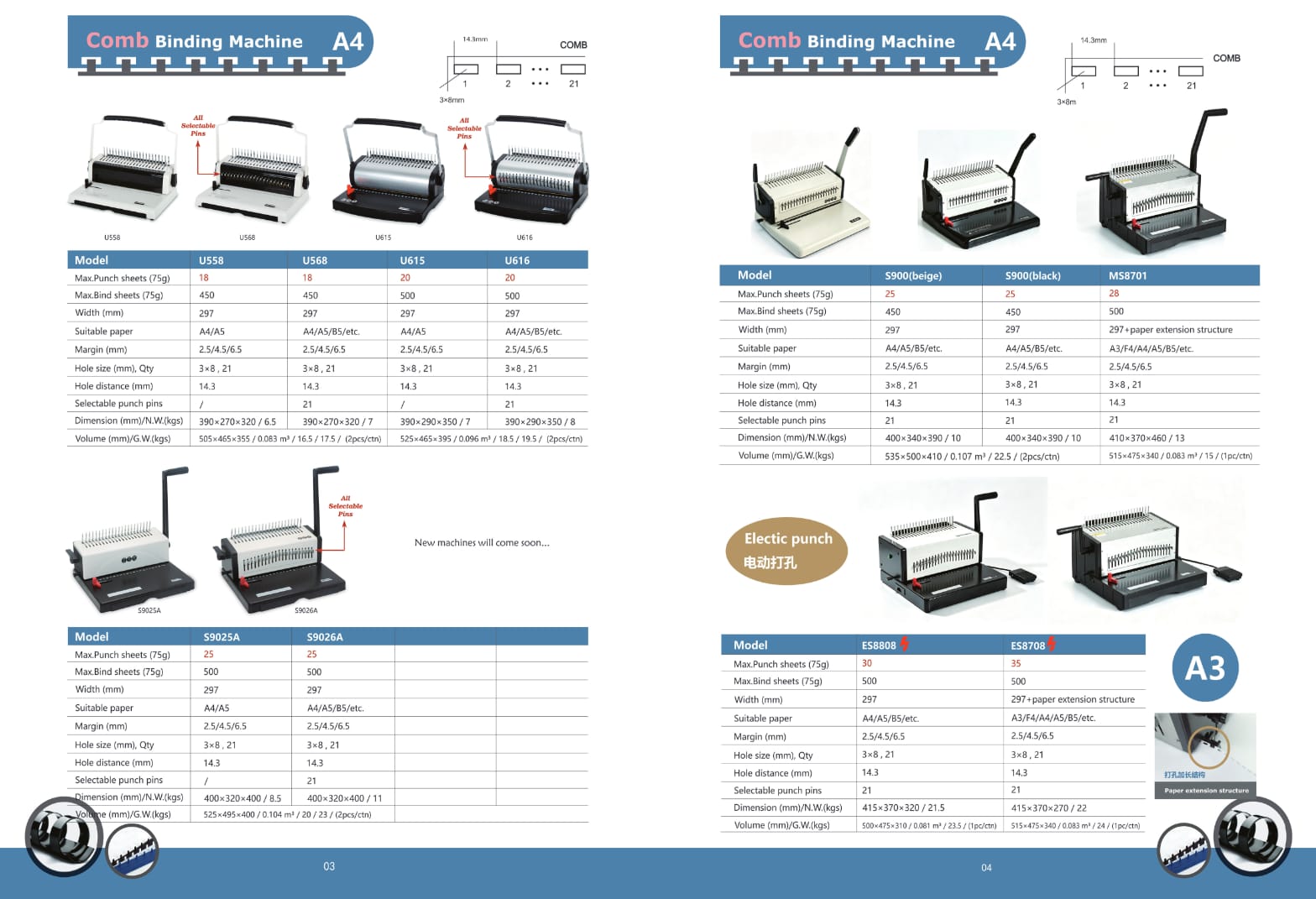
How to read a binding machine spec sheet
A specification sheet is written for quoting, not for reading like a brochure. Six numbers decide whether a machine fits the work: punch capacity, bind capacity, working width, hole distance, net weight and carton volume. Everything else describes the machine around those numbers.
Punch capacity is always rated at 75 gsm
Capacity is measured in sheets of 75 gsm paper, the cheapest common denominator. A 25-sheet rating means 25 sheets of ordinary copy paper; 160 gsm card takes a fraction of that before the die starts to drag. Quote heavy stock from a test on the machine, not from the headline number.
Bind capacity follows the element, not the punch
A comb binder that punches 20 sheets can still bind 500, because the comb carries the stack and the die only opens the holes. Wire and coil work the other way: the loop sets the limit. 3:1 wire tops out around 120 sheets on most models, while 2:1 reaches 250 to 280 with a 31.8 mm loop.
Working width and hole distance identify the format
Working width is the widest sheet the die can reach: 297 mm on A4 machines and 340 mm on F4, with a paper extension on models that also punch A3. Hole distance identifies the element — 14.3 mm is comb, 8.47 mm is wire 3:1, 12.7 mm is wire 2:1 and 6 mm is coil. When those two numbers match your paper and your consumable, the machine will run the job.
Carton data decides the landed cost
Net weight, carton size, volume and units per carton sit on the same sheet because they price the freight. A 0.25 m³ four-die machine and a 0.08 m³ comb binder do not ship for the same money, even when the FOB prices are close. Read the last column before comparing the first.
Models mentioned in this note
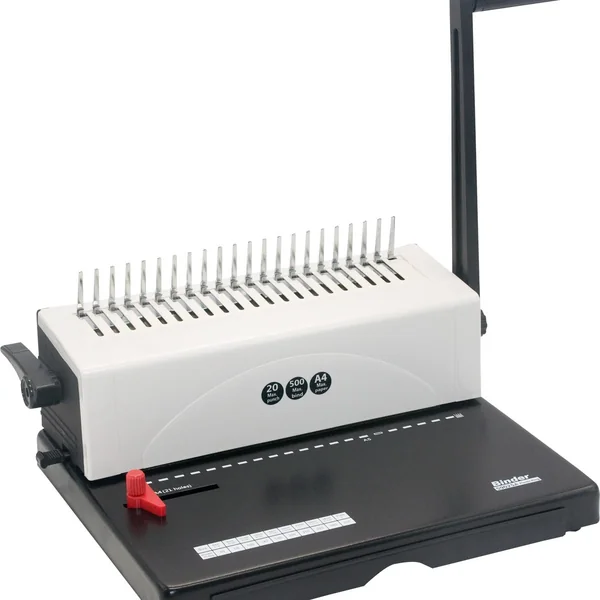
S9026A
Comb Binding MachinesA4 Comb binding machine- Max punch
- 25
- Max bind
- 500
- Width
- 297
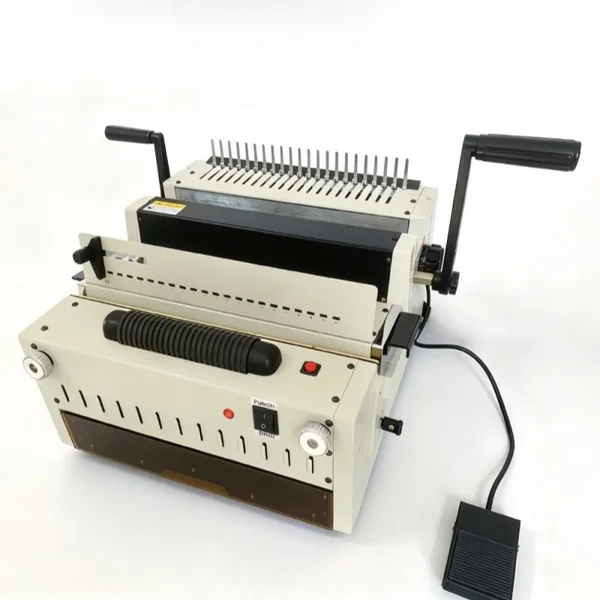
6918
2-in-1 & 4-in-1 Multi-functionA4 Multi-function binding machine- Max punch
- 25
- Max bind
- 500 / 120 / 250 / 500
- Width
- 297
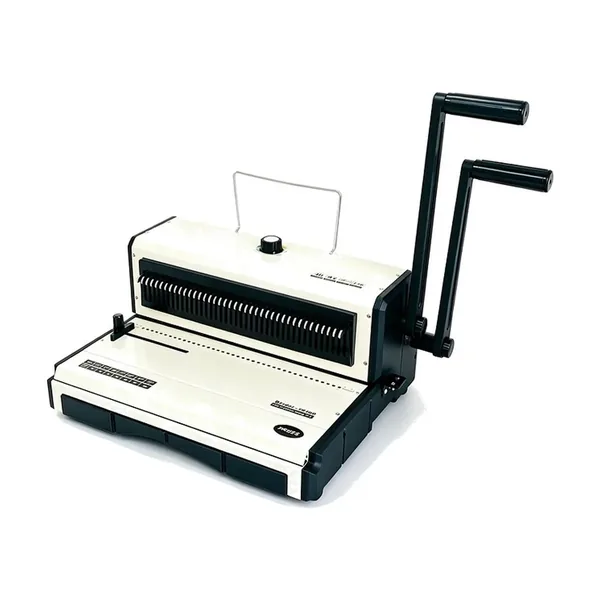
T970
Wire 3:1 Binding MachinesF4 Wire 3:1 binding machine- Max punch
- 20
- Max bind
- 120 (6.4 – 14.3 mm wire)
- Width
- 340 + paper extension
Knowledge