Back to product knowledge
Comb binding maintenance: the die, the margin and the comb
A comb binder is a simple machine: one die, one handle or motor, one comb opener. Almost every complaint we receive traces back to the die, the margin setting or the comb size rather than to the frame.
The die is the part that wears
Punch pins cut paper thousands of times a week. When holes begin to tear at the edge, when the handle needs more force for the same lift, or when the chip tray fills faster than usual, inspect the die first. A damaged pin can usually be replaced on its own; a full die swap is a workshop job.
Set the margin for the paper, not for the job
The three-position margin — 2.5, 4.5 and 6.5 mm — sets how far the holes sit from the edge. Thin paper needs the short margin so the sheet does not fold into the die; heavy covers need the long one so the comb does not pull out under load. Setting the margin for the cover and then punching the text block is the most common mistake on a mixed job.
Comb size follows the block, not the sheet count
A comb that is too small will not close; one that is too large lets pages slide and the spine look loose. Measure the bound block and pick the comb from that thickness. The same 500-sheet machine runs a 6 mm comb on a thin report and a 51 mm comb on a full manual.
A short routine that prevents most downtime
Empty the chip tray after every long run, keep paper dust out of the die, and check that the handle returns fully before the next lift. Store the machine with the die released rather than under pressure. This does not replace the manual, but it removes the failures operators actually report to us.
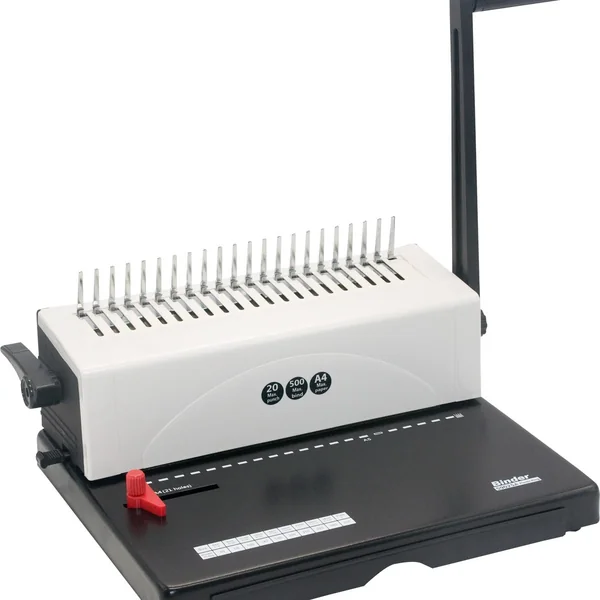
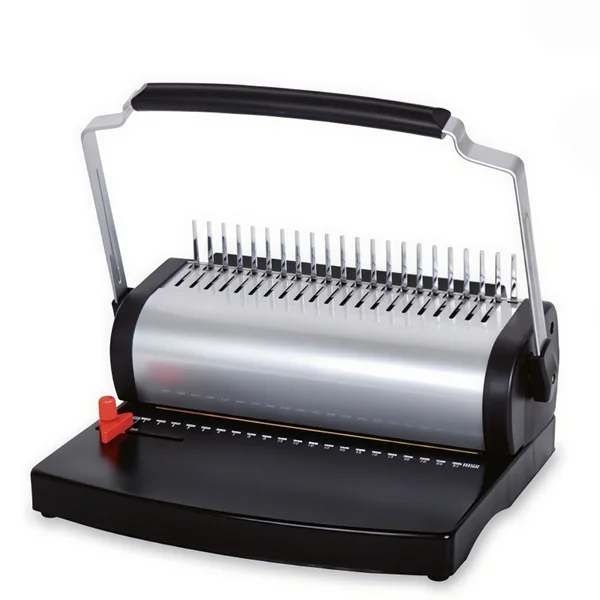
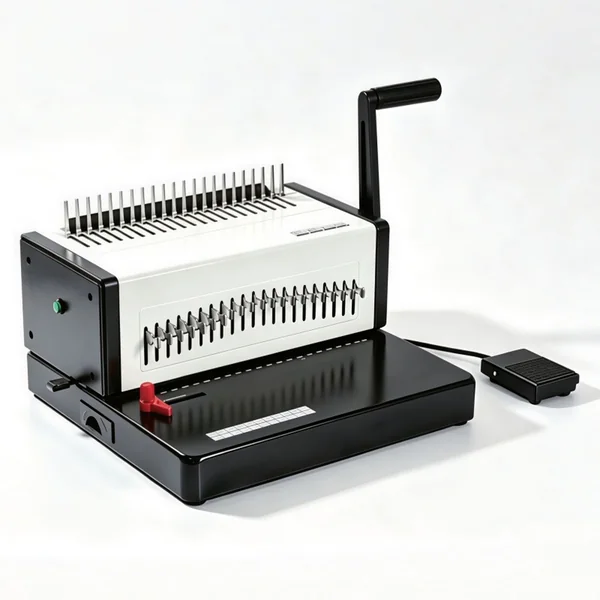
Models mentioned in this note
Knowledge