Back to product knowledge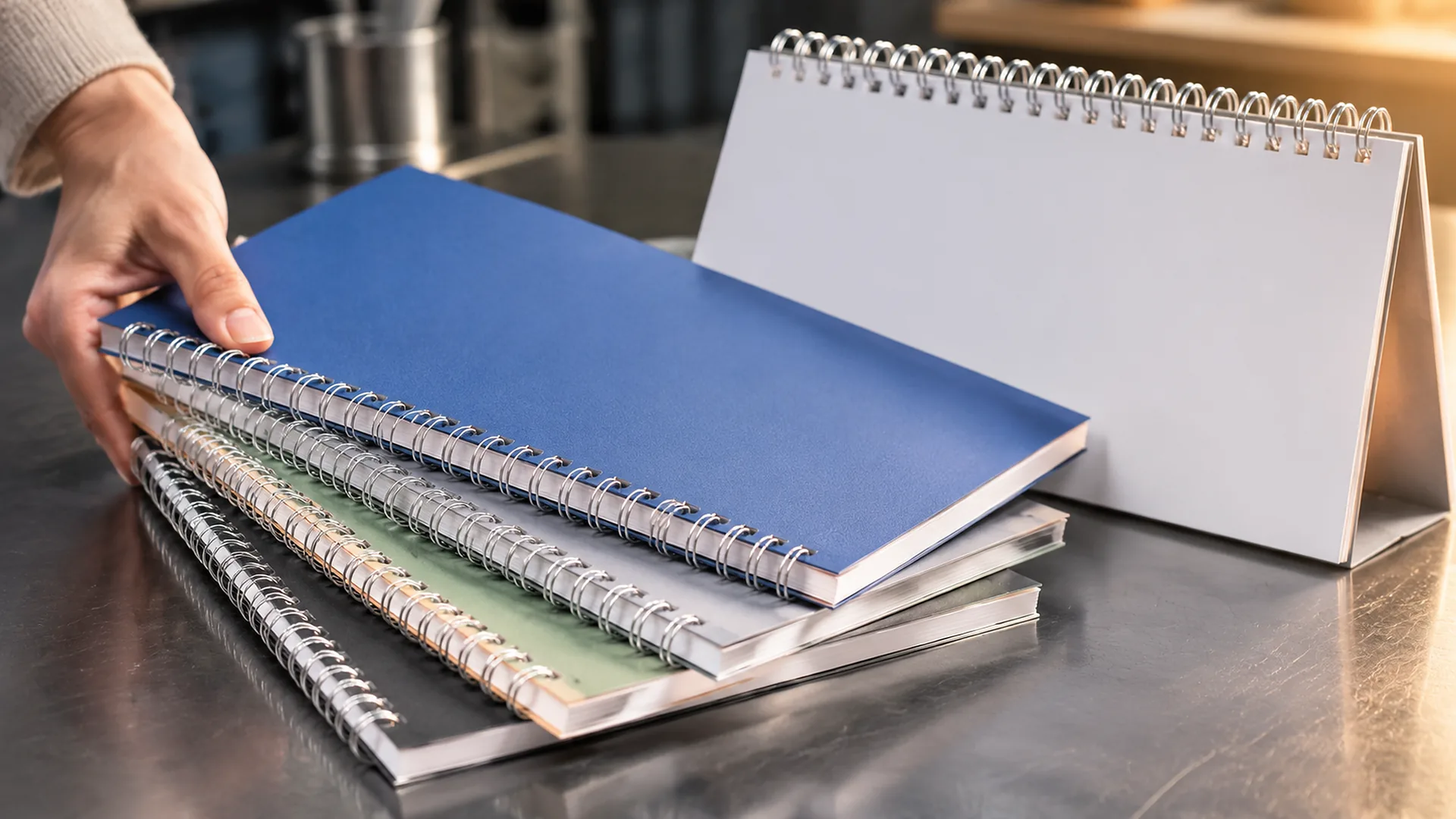
Comb, wire or coil: choosing the right binding for the job
The binding system decides how a document opens, how it stacks and what the customer can do with it afterwards. Most shops end up with two systems, and the first machine should be chosen by the work that pays the bills.
Comb: the fastest way to a flat, stackable spine
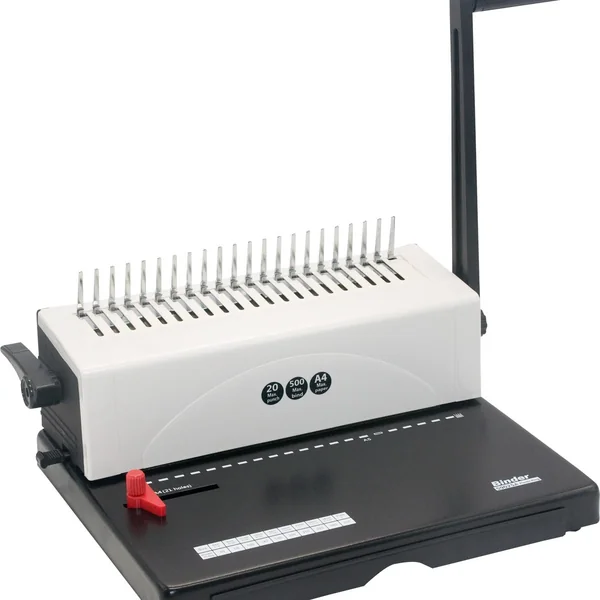
A plastic comb pushes through a rectangular slot pattern — 21 holes on A4, 24 on F4 — and holds up to 500 sheets. The spine is square, so bound reports stack flat on a shelf and print on the spine is legible. Punches start at 12 sheets and reach 35 sheets on electric models.
Wire: for calendars and documents that must open flat
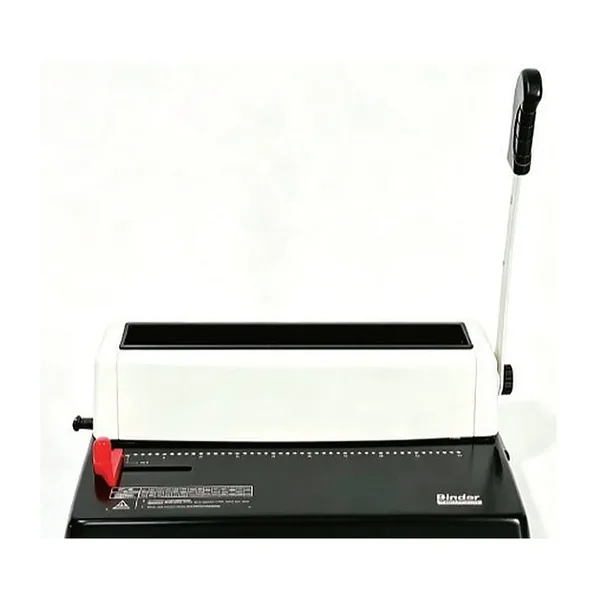
Double-loop wire uses a 3:1 pitch (34 holes on A4, 40 on F4) or a 2:1 pitch (23 holes on A4, 27 on F4). 3:1 covers thin to medium books and is the standard for wall calendars, where the hanger slot is punched in the same pass as the binding holes. 2:1 is the heavy option: fewer holes per inch means bigger loops, and the machines bind up to 280 sheets.
Coil: the 360-degree fold
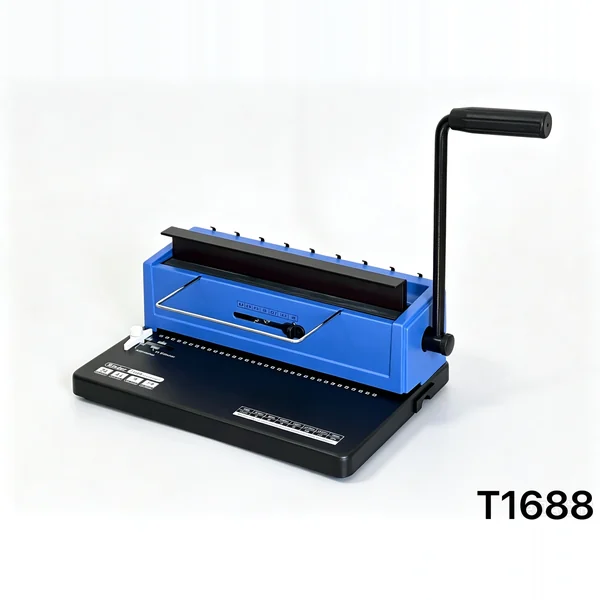
Spiral coil in our range uses 49 holes on a 6 mm pitch. A coil-bound book folds completely behind itself and stays open on a desk, which is why notebooks, workbooks and field manuals use it. Electric binding versions close the spiral in one action instead of by hand.
A rule of thumb for a mixed-job shop
Start with a comb binder that punches 20 to 25 sheets, then add a wire 3:1 machine when calendar or brochure work appears. If a single footprint has to cover everything, a 2-in-1 comb plus wire unit avoids buying two chassis.
Models mentioned in this note
Knowledge