Back to product knowledge
Opening a binding service: the machines to buy first
Finishing work is sold before it is bought: the first machine should match orders the shop already turns away, not a wish list. In most small shops that means comb binding first, wire second, coil third.
Step one: cover the everyday report
One comb binder that punches 20 to 25 sheets handles contracts, internal reports and training manuals. Choose a model with selectable pins so A5 jobs do not need a second die.
Step two: add the seasonal job
Wall and desk calendars are wire 3:1 work, and the hanger slot has to be punched in the same pass. A calendar-dedicated model such as the G930 series avoids re-punching and cuts the per-unit time on a large order.
Step three: add the notebook line
Coil 4:1 completes the set for notebooks and workbooks. An electric binding model matters here: closing spirals by hand is the bottleneck once orders pass a few hundred books.
For distributors: one demo unit per system
A distributor does not need depth in every model, but does need one working machine per binding system on the floor, plus spare dies for the hole patterns most requested locally. Multi-function units such as the 6918 cover four systems with four dies in one footprint, which keeps the showroom small and the demonstration complete.
Models mentioned in this note
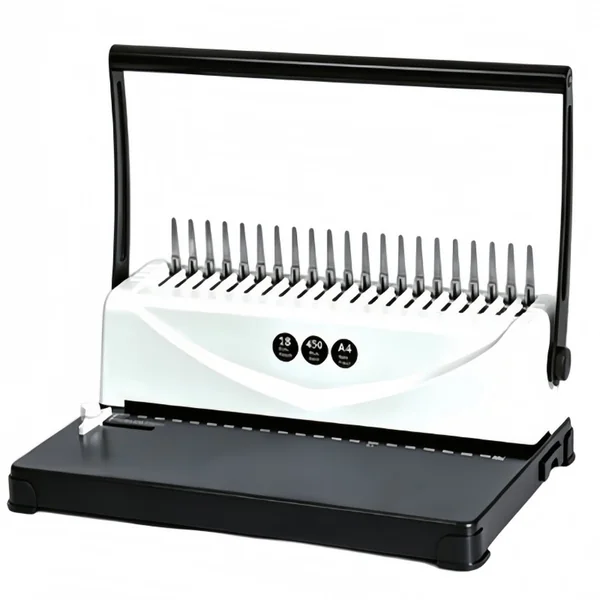
CS-18White
Comb Binding MachinesA4 Comb binding machine- Max punch
- 18
- Max bind
- 450
- Width
- 297
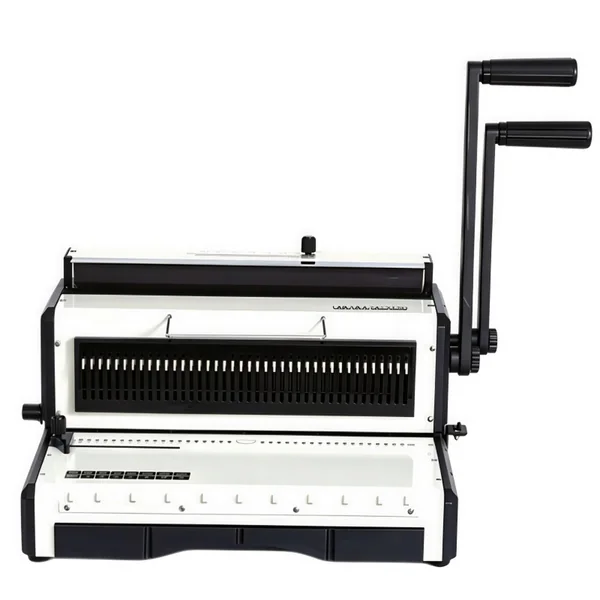
G930A
Wire 3:1 Binding MachinesF4 Wire 3:1 binding machine- Max punch
- 20
- Max bind
- 120 (6.4 – 14.3 mm wire)
- Width
- 340 + paper extension
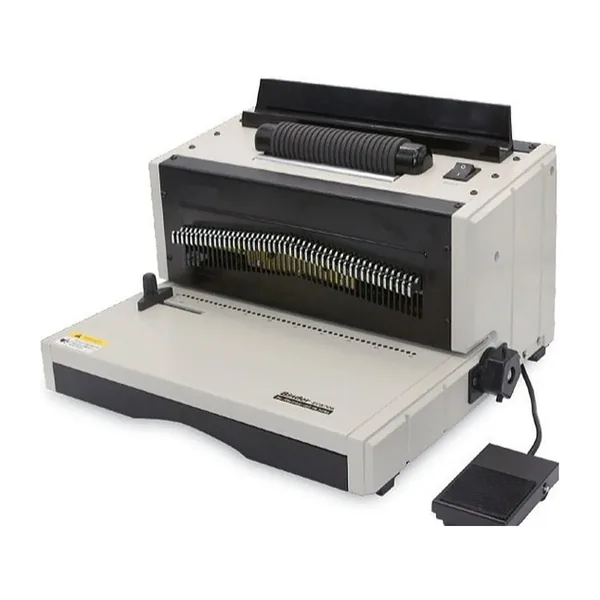
EC8706
Coil 4:1 Binding MachinesA3 Coil 4:1 binding machine- Max punch
- 30 (electric punch)
- Max bind
- 500 (electric bind)
- Width
- 297 + paper extension
Knowledge